
Presentation Folder vs. Sell Sheet: Which One Wins the Pitch Meeting?
Introduction
You have ten minutes with a prospect, a decision-maker who is also meeting with two other vendors this week, and one shot to leave behind something that gets remembered after you walk out the door. Do you hand them a polished presentation folder packed with your full capabilities, or a single sell sheet that gets straight to the point?
This is one of the most common questions we hear from marketing agencies and small business owners prepping for a pitch: presentation folder vs. sell sheet, which one actually wins the meeting? The honest answer is that it depends on the meeting itself, who is in the room, and what happens after you leave. Below, we break down what each format does best, when to use one over the other, and how to decide with confidence before your next appointment.
What Is a Presentation Folder?
A presentation folder is a pocketed, often two-sided folder used to hold and organize multiple printed pieces, such as a company overview, pricing sheets, case studies, and a business card. Instead of handing a prospect a loose stack of papers, you hand them one cohesive, branded package that keeps everything together and looks intentional.
Presentation folders typically include die-cut pockets, a slit for a business card, and a heavier paper stock with finishes like gloss, matte, or soft-touch lamination. Because the outside cover carries your logo and branding, it also functions as a mini billboard sitting on a desk or in a filing cabinet long after the meeting ends.
When a Presentation Folder Makes Sense
A presentation folder earns its place when the pitch involves multiple documents, several stakeholders, or a longer sales cycle. It is the right call when you are:
Presenting a full proposal with pricing, scope, and terms
Meeting with a buying committee where materials get passed around or forwarded internally
Onboarding a new client and want a polished welcome kit
Attending an RFP presentation where organization and professionalism are being scored alongside content
What Is a Sell Sheet?
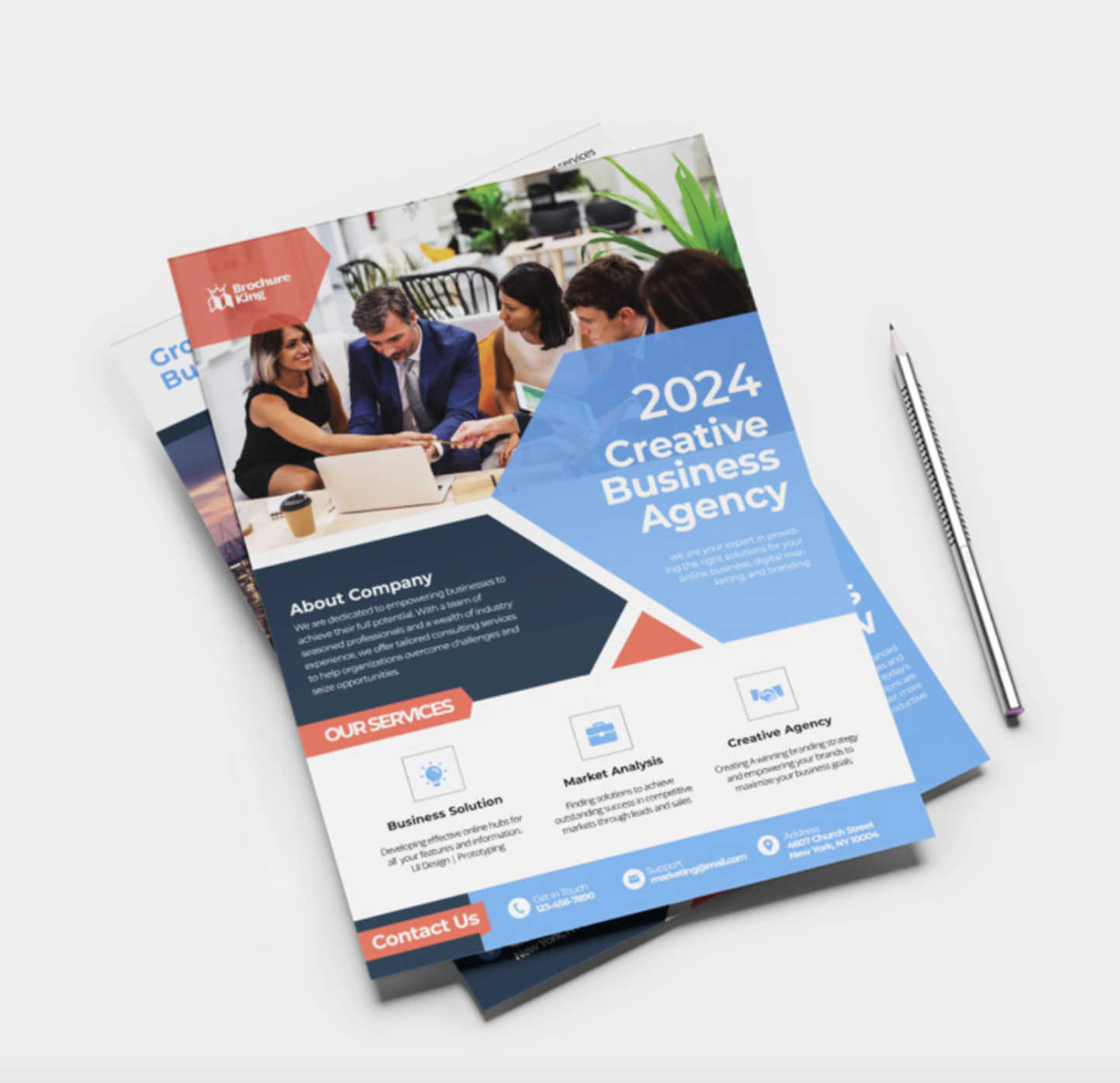
A sell sheet, sometimes called a one-sheet or spec sheet, is a single-page, double-sided document that summarizes one product, service, or offer as clearly and persuasively as possible. There is no folder, no supporting stack of documents, just one sheet built to answer the buyer's core questions: what is this, what does it do for me, and what happens next.
Because a sell sheet has so little room, every line has to earn its place. Strong sell sheets lead with a clear headline, back it up with two or three benefit-driven bullet points, include a visual (product photo, chart, or before-and-after), and close with a direct call to action.
When a Sell Sheet Makes Sense
A sell sheet works best in fast-moving, single-topic conversations. Reach for a sell sheet when you are:
Introducing one specific product or service rather than your whole company
Working a trade show floor or networking event where attention spans are short
Following up after a discovery call with a quick, scannable recap
Leaving something behind with a gatekeeper or a stakeholder who was not in the room
Presentation Folder vs. Sell Sheet: The Key Differences
Both formats are leave-behinds, but they are built to do different jobs. Here is how they compare on the factors that actually matter when you are deciding which one to order.
Cost and Turnaround Time
Sell sheets are almost always the more budget-friendly and faster option. A single-page, double-sided print job requires less paper stock, less finishing (no die-cutting or pocket gluing), and generally ships faster than a custom folder. If you are on a tight deadline or ordering for a large sales team, a sell sheet is the more practical choice.
Presentation folders cost more per unit because of the die-cutting, folding, and gluing involved in producing the pockets, but that cost buys durability and a more premium feel. Many businesses treat the folder shell as a reusable asset. Print the folders in bulk once, then slot in updated inserts as pricing or offerings change.
How Much Information Each One Can Hold
A sell sheet is intentionally limited. That constraint is a feature, not a flaw. It forces clarity and keeps the reader from getting overwhelmed. Research on B2B buying behavior backs this up: buyers are increasingly self-directed and prefer content they can absorb quickly, rather than dense packets they have to work through later.
A presentation folder solves the opposite problem. When a prospect genuinely needs pricing tiers, a services breakdown, case studies, and a signed proposal, trying to cram all of that onto one page hurts comprehension instead of helping it. The folder lets you organize dense information into digestible, separate pieces without losing the polish of a single branded package.
First Impressions and Perceived Value
Printed materials carry a psychological weight that a PDF simply does not. Studies on reading comprehension consistently find that people process and retain information from paper more effectively than the same information on a screen, in part because of the tactile, physical nature of print. A textured folder cover or a well-designed sell sheet on heavier stock signals that you invested in the relationship before the deal was even signed.
In our production queue, we have noticed a consistent pattern: agencies pitching larger retainers or ongoing contracts tend to order presentation folders, while businesses selling a single product or seasonal promotion lean toward sell sheets. The format choice itself becomes part of how professional and prepared a business appears in the room.
Which Format Wins the Pitch Meeting?
There is no universal winner here. The right format depends on what you are selling, who you are selling to, and how much material the conversation actually requires.
Choose a Presentation Folder If
Your pitch involves multiple deliverables, a multi-page proposal, or a buying committee that will review the materials without you in the room. Folders also make sense any time you want a leave-behind that survives being tossed into a bag or a desk drawer without getting crumpled or lost.
Choose a Sell Sheet If
You are pitching one clear offer, working a room with limited time per conversation, or need a low-cost asset you can print and hand out in volume. Sell sheets also shine as a fast follow-up after an initial meeting, giving the prospect something concise to forward to a colleague.
Why Many Agencies Use Both Together
We often recommend pairing the two rather than picking one exclusively. A presentation folder can hold a sell sheet as one of its inserts alongside a case study and a pricing page. This gives you the organized, premium feel of a folder while still giving the prospect a quick-reference sell sheet they can pull out and forward on its own. In our sessions with marketing agency clients, this combination consistently comes up as the preferred setup for higher-stakes proposal meetings, while stand-alone sell sheets remain the go-to for trade shows and quick introductions.
A Real-World Look at Format Choice
Consider two common pitch scenarios we see across our client base. A home care agency preparing for a referral meeting with a hospital discharge planner is usually walking into a room with several stakeholders and a longer decision timeline. A presentation folder holding a company overview, service area map, and a few care outcome highlights gives the planner something they can review later and pass along internally.
Compare that to a dental practice introducing a new whitening service to existing patients at the front desk. There is no committee, no multi-week decision process, just a quick moment to communicate one offer clearly. A sell sheet on the counter does that job better than a folder ever could, because the goal is a fast, single-topic read, not a comprehensive packet.
The lesson we consistently pass along to clients: match the format to the complexity of the decision, not to a personal preference for one product over the other.
Design Tips for a Pitch-Ready Presentation Folder or Sell Sheet
Whichever format fits your meeting, the design details determine whether it gets read or gets set aside.
Presentation Folder Design Tips
Keep the cover clean: logo, tagline, and a single strong visual are enough
Use a business card slit so contact information never falls out
Choose a soft-touch or matte laminate for a premium, fingerprint-resistant feel
Design inserts as standalone pieces in case they get pulled out and handed off separately
Sell Sheet Design Tips
Lead with a benefit-driven headline, not your company name
Limit copy to scannable bullets; save the details for a follow-up conversation
Include one strong visual, whether that is a product photo, chart, or simple diagram
End with one clear next step, such as a phone number, QR code, or web address
Conclusion
The presentation folder vs. sell sheet decision comes down to the shape of your pitch. Complex proposals, multiple stakeholders, and longer sales cycles call for the organization and polish of a presentation folder. Single-topic offers, trade shows, and fast follow-ups call for the clarity and low cost of a sell sheet. Many businesses find that the strongest approach uses both together, a folder for the full story and a sell sheet as the quick-reference piece inside it. Whichever direction fits your next meeting, the format you choose says as much about your business as the pitch itself.
Ready to Print Your Next Pitch Materials?
Whether your next meeting calls for a polished presentation folder, a sharp sell sheet, or both working together, Brochure King prints custom marketing materials for small businesses, agencies, and professionals across the country, with dedicated support for teams in New York, Los Angeles, and Chicago.
Contact us today to get a fast, affordable quote for your next pitch.
Frequently Asked Questions
Is a presentation folder or a sell sheet better for a first meeting with a new prospect?
It depends on how much you need to cover. For an initial meeting where you are introducing your full range of services, a presentation folder gives you room to include a company overview, pricing, and case studies in one organized package. If the first meeting is focused on a single product or service, a sell sheet is often a stronger fit because it keeps the conversation focused and easy to follow up on.
Can a sell sheet be included inside a presentation folder?
Yes, and it is one of the most common combinations we produce. A sell sheet fits neatly into a folder pocket alongside other materials like a case study or pricing page, giving the prospect a comprehensive package along with a standalone piece they can pull out, reference quickly, or pass to a colleague without handing over the whole folder.
How much does it cost to print presentation folders versus sell sheets?
Sell sheets are generally less expensive per piece since they are a single sheet printed double-sided with no die-cutting or assembly involved. Presentation folders cost more due to the pocket construction and finishing work, but many businesses print the folder shell in bulk once and reuse it for months by swapping out the printed inserts, which lowers the cost per use over time.
