

ABA Office Print Checklist: Essentials for New Practices

Introduction
Opening a new ABA therapy practice involves a long list of moving parts: credentialing, payer contracts, EMR setup, hiring BCBAs and RBTs, and building out a clinic space that works for autistic children and their families. Print tends to be the last thing anyone thinks about, and it is usually the first thing that gets noticed on day one when a parent walks in and there is nothing to hand them.
This ABA office print checklist covers what a new practice actually needs on the shelf before opening, organized by where each piece gets used. We have printed for behavioral health practices across the country, from solo BCBA startups to multi-site clinics adding their fourth location, and the same gaps show up again and again. The goal here is to help you order once, order correctly, and avoid the scramble that happens two weeks after launch.
Why Print Still Carries Weight in an ABA Practice
Most of your marketing lives online. Your intake still happens in person, and that is where print does the heavy lifting.
An ABA practice has three audiences that all need something physical:
Parents and caregivers. A family touring your clinic is often overwhelmed. They have just received a diagnosis, they are comparing two or three providers, and they will not remember what you said. They will remember what they carried out to the car. In our experience, the practices that convert tours into signed intake packets are almost always the ones that send families home with a folder rather than a promise to email something later.
Referral partners. Pediatricians, developmental specialists, school psychologists, speech and occupational therapists, and early intervention coordinators all keep a small stack of provider materials at their front desk. If your piece is not in that stack, you are not in the conversation. A rack card sitting in a pediatric waiting room does work for you every single day at no additional cost.
Regulators and your own compliance file. Some print is not optional. If your practice is a HIPAA-covered entity with a physical office where you deliver services directly to individuals, you are required to post your entire Notice of Privacy Practices in a clear and prominent location at the facility, keep the current version available for people to take with them, and provide a paper copy to anyone who asks. That is a poster and a stack of printed notices, not a PDF on your website.
There is also a practical reason print matters more in ABA than in a typical office. Many of the children you serve do better with low-stimulation, non-screen materials. A laminated visual schedule, a printed token board, or a simple picture card does not chime, autoplay, or lose battery in the middle of a session.
The ABA Office Print Checklist: What to Order Before You Open
Here is the working checklist, grouped by where the material actually gets used. If you are opening in the next 60 days, treat the first two sections as non-negotiable and the rest as your phase two order.
Front Desk and Waiting Room Essentials
This is the material that carries your first impression while a parent waits with a child who does not want to be waiting.
Practice brochure. Your core explainer. What ABA is, what your assessment process looks like, what a typical week of services involves, and how insurance works. Tri-fold or bi-fold, both work.
Rack cards. A slim, single-piece version of your brochure that fits in a standard display. Keep a display at your own front desk and use the rest for referral partners.
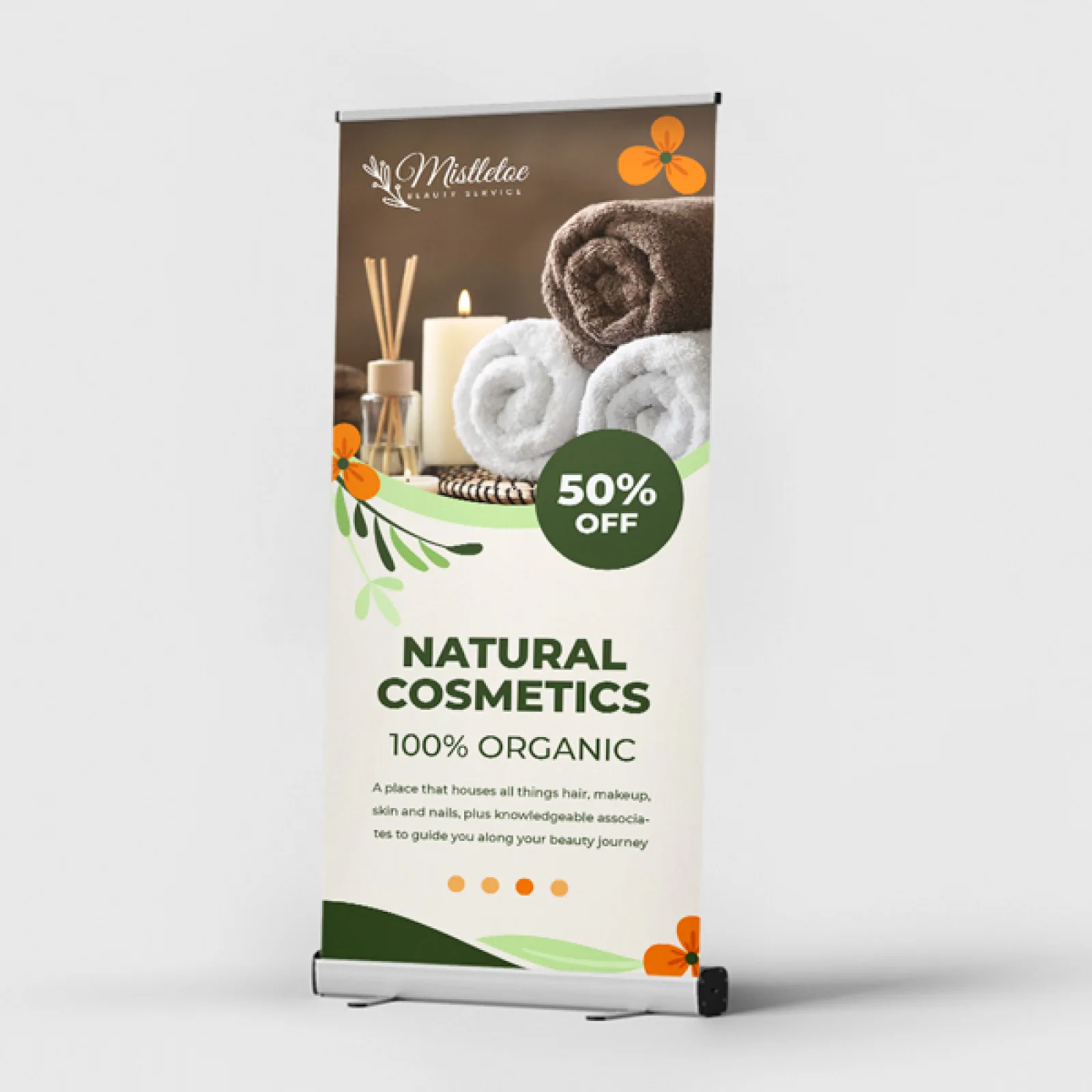
Waiting room posters. Your HIPAA Notice of Privacy Practices, your language access notice if applicable, your good faith estimate notice, plus any state-required postings. Many practices also print a simple "what to expect during your visit" poster.
Take-one notice copies. Printed copies of the Notice of Privacy Practices that families can take with them, kept in a wall pocket or on the counter.
Stickers. Underrated and inexpensive. Reinforcement stickers for sessions, practice-branded stickers for kids leaving after a good day, and stickers for name badges or visitor passes.
Intake and Onboarding Materials
Intake is where families decide whether you are organized enough to trust with their child.
Presentation folders. The single highest-value print item for an ABA practice. Pocketed, branded, and loaded with your consent forms, insurance summary, service agreement, scheduling policy, and contact sheet. One folder replaces a loose stack of papers that gets lost between the car and the kitchen table.
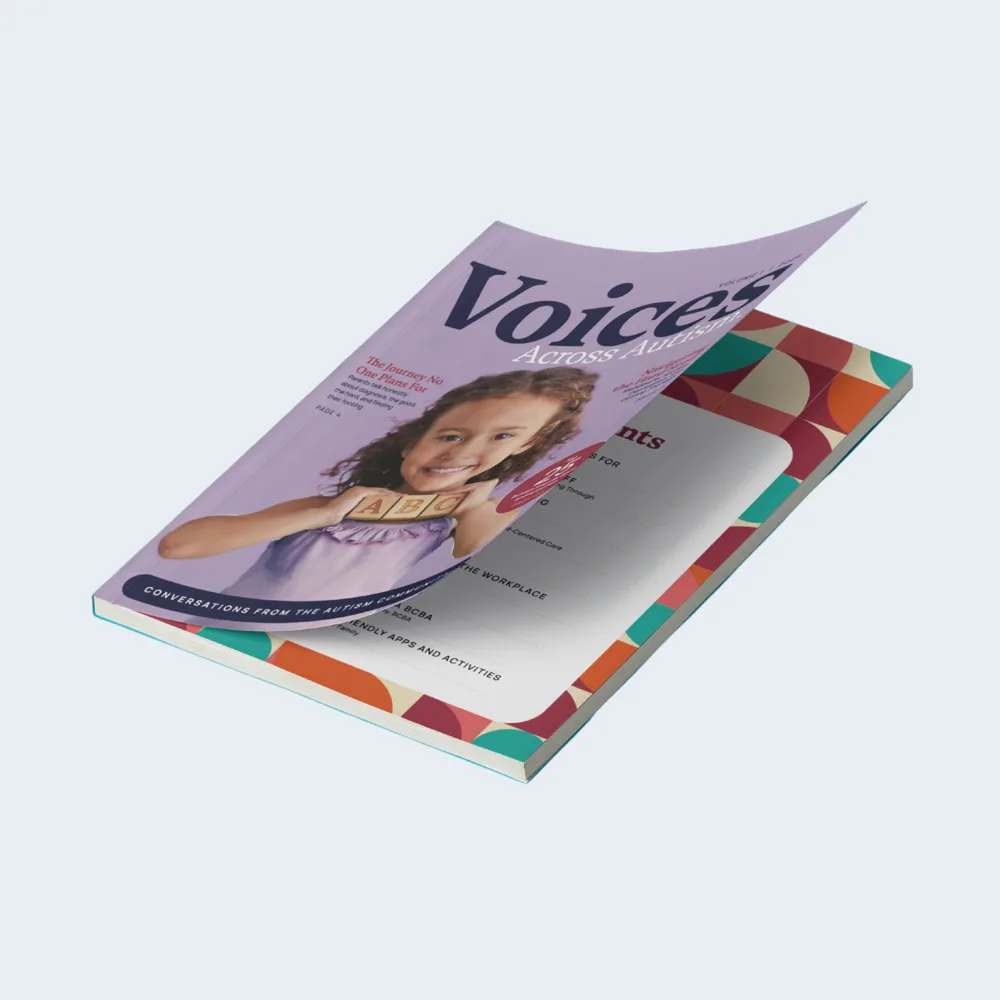
Intake booklets. If your onboarding paperwork runs long, a saddle-stitched booklet keeps it in order and signals professionalism. Practices with heavy documentation requirements often prefer a booklet over a folder stuffed with fifteen loose sheets.
Parent guide or family handbook. Session expectations, cancellation policy, what parent training involves, how progress is measured, and who to contact for what. This is the piece families actually keep.
Sell sheets. One-page overviews of a specific program: early intensive behavioral intervention, school readiness, social skills groups, parent training, or in-home services. Print them separately so you can add or retire a program without reprinting everything.
We worked with a two-BCBA practice that had been emailing a nineteen-page PDF to every new family. Their no-show rate for the first appointment was a persistent problem. They moved the same content into a printed folder handed out at the tour, with the first appointment date written on the inside pocket by hand. The change cost them one folder order. It is the kind of small operational fix that print is unusually good at.
In-Session and Clinical Support Print
Visual supports and schedule cards. Printed on heavier card stock so they survive being handled, dropped, and chewed on.
Token boards and reinforcement charts. Print in quantity. Laminate the ones that stay in the therapy rooms.
Posters for therapy rooms. Calm-down sequences, first-then boards, emotion charts, and simple house rules in clear type.
Parent training handouts. Flyers or single sheets summarizing the skill being targeted at home that week. Caregivers follow through more consistently when they leave with something in hand.
Referral and Community Outreach Pieces
Rack cards for referral partners. Restock quarterly. Front desks throw things out.
Sell sheets for pediatric offices. Written for the clinician, not the parent. Include your service area, ages served, insurance accepted, current waitlist status, and how to send a referral.
Postcards. Useful for announcing a new location, a waitlist opening, an open house, or a parent workshop. Postcards also work well through USPS Every Door Direct Mail, which lets you saturate selected carrier routes without buying a mailing list.
Flyers. For community events, autism resource fairs, school partnerships, library workshops, and hiring. New practices underestimate how much of their print goes toward recruiting RBTs.
Door hangers. Practical for in-home ABA providers building density in a specific neighborhood, or for announcing a new clinic in a residential area.
Catalogs or program booklets. Larger practices with multiple service lines use these for school district partnerships and payer meetings, where a folder feels too thin.
Print Specs That Hold Up in a Busy Clinic
Choosing the wrong stock is the most common and most expensive mistake we see. An ABA clinic is a high-contact environment. Materials get handled by children.
Paper Stock and Coating Recommendations
Item | Suggested stock | Finish |
Brochures | 100 lb text | Gloss or satin |
Rack cards | 14 pt or 16 pt cover | UV coated one side |
Presentation folders | 14 pt cover minimum | Matte with spot options |
Booklets and handbooks | 80 lb text interior, 100 lb cover | Matte interior for readability |
Posters for compliance postings | 100 lb cover or heavier | Matte, non-glare |
Sell sheets | 100 lb text | Matte, so partners can write on them |
Visual supports and token boards | 16 pt cover | Uncoated or matte, then laminate |
Stickers | Standard vinyl | Gloss |
Two notes worth flagging. First, avoid high-gloss on anything meant to be read on a wall. The ADA guidance on signage calls for non-glare finishes and strong light-dark contrast, and that principle applies to your posted notices even when the specific tactile requirements do not. Glossy posters under fluorescent lighting are hard to read for anyone with low vision.
Second, choose matte for anything a referral partner might write on. Pediatric office staff scribbles on sell sheets constantly. A UV-coated sheet repels pen ink and ends up in the recycling.
Sizes and Formats That Work in Real Clinics
Rack cards at 4 x 9 inches fit standard displays and USPS postcard rates.
Brochures at 8.5 x 11 folded to tri-fold remain the most economical and most familiar format for parents.
Presentation folders at 9 x 12 with a business card slit hold letter-size intake paperwork without bending.
Postcards at 6.5 x 9 or larger qualify as flats for EDDM mailing. EDDM Retail currently allows between 200 and 5,000 pieces per ZIP Code per day, which suits a single-clinic outreach push.
Posters at 11 x 17 are large enough for a compliance posting without dominating a small waiting area.
How Much to Order in Your First 90 Days
New practices tend to over-order brochures and under-order folders. Brochures are the piece you will most want to revise once you learn what parents actually ask. Folders are the piece you will run out of first.
Item | First order | Reorder trigger |
Presentation folders | 250 to 500 | At 100 remaining |
Practice brochures | 250 | At 75 remaining |
Rack cards | 500 to 1,000 | Quarterly restock cycle |
Sell sheets (per program) | 100 to 250 | As programs change |
Parent handbook booklets | 100 | At 30 remaining |
Compliance posters | 5 to 10 | On policy revision |
Notice of Privacy Practices copies | 250 | At 75 remaining |
Postcards | 1,000 or by route count | Per campaign |
Flyers | 250 | Per event |
Stickers | 1,000 | Monthly |
A practical rule we give new clinics: order a 90-day supply of anything with a date, a rate, or a staff name on it, and a 12-month supply of anything evergreen. Your brochure will change. Your folder will not.
Design Rules That Matter More in ABA Than in Other Verticals
Write for the Parent Reading It at 11 p.m.
Your reader is exhausted. Keep sentences short, use plain language, and put the answer to "what happens next" on the front panel rather than the back. Skip the clinical vocabulary in parent-facing materials and save the terminology for your referral sell sheets. Set body copy at 11-point minimum, use generous line spacing, and avoid low-contrast type over photographs.
Use identity-first or family-preferred language consistently, and be careful with imagery. Practices that lead with puzzle-piece graphics increasingly hear about it from the families they are trying to serve.
Keep Claims Accurate and Compliant
The BACB Ethics Code has direct implications for your printed materials. Public statements include brochures and printed matter, so the same standards that govern your website govern your rack card. Two provisions come up constantly in print review: behavior analysts do not advertise nonbehavioral services as behavioral services without a clear disclaimer, and testimonials are not solicited from current clients for advertising purposes.
That second point catches new practices off guard. If you were planning a brochure panel of parent quotes, make sure those quotes come from families who have completed services, and check your state licensure rules as well. We have had clients pull a print run at proof stage over exactly this. Reviewing your copy against the code before the file goes to press costs nothing. Reprinting 1,000 brochures does.
Also avoid outcome language that promises results. "Individualized programs built around your child's goals" is defensible. "Proven to reduce problem behavior by half" is not, unless you have your own data and are prepared to defend it.
Plan for Spanish and Other Languages
Autism prevalence in the United States is now estimated at about 1 in 31 children aged 8 years, based on CDC ADDM Network data, and identification has risen across historically underserved communities. Your intake materials should reflect the families in your service area. The cheapest time to plan a Spanish version is during your first design round, not after your first monolingual Spanish-speaking family walks in. Print both language versions in the same order, and you save on setup.
Five Print Mistakes We See From New ABA Practices
Printing addresses and phone numbers into evergreen pieces. Practices move and phone systems change. Put the address on a sticker or a folder insert, not embossed on 1,000 folders.
Ordering brochures before finalizing insurance panels. Nearly every new practice adds a payer within the first six months. Leave the payer list on a separate sell sheet you can reprint cheaply.
Skipping the presentation folder. It is the highest-conversion item on this list and the one most often cut from the launch budget.
Using a logo file that was never built for print. A web-resolution PNG at 72 dpi will look soft and pixelated at any size. Ask your designer for vector files and a CMYK color build before you place your first order.
Ordering one piece at a time. Combining a folder, brochure, rack card, and sell sheet order into a single run lowers your per-piece cost and keeps color consistent across the whole set. Pieces ordered months apart from different presses rarely match.
Conclusion
A new ABA practice does not need an elaborate print program. It needs the right dozen items, printed on stock that survives a clinic, in quantities that match a realistic reorder cycle. Start with the front desk and intake essentials: presentation folders, a practice brochure, rack cards, compliance posters, and printed copies of your Notice of Privacy Practices. Add clinical support materials and program sell sheets as your service lines settle. Move into postcards, flyers, and door hangers once you know which referral sources and neighborhoods are actually producing intakes.
Get the specs right the first time, keep your claims aligned with the BACB Ethics Code, plan for a second language early, and consolidate your orders so your whole set matches. Work through this ABA office print checklist before opening week, and you will spend your launch focused on clients instead of chasing a rush order.
Print Your ABA Office Essentials With Brochure King
Brochure King prints brochures, flyers, posters, presentation folders, booklets, postcards, catalogs, rack cards, sell sheets, door hangers, and stickers for practices nationwide, with fast turnaround and affordable pricing for growing clinics. We serve ABA providers across Texas, Florida, and California, along with practices in every other state.
Whether you are opening your first clinic or standardizing materials across multiple sites, we can help you build a complete print set in a single order.
Contact us today to ask about stock and finish options, or get help sizing your first order. You can also request a quote here.
Frequently Asked Questions
What printed materials does a new ABA therapy practice need?
At minimum, a new ABA practice needs presentation folders for intake paperwork, a practice brochure explaining services and the assessment process, rack cards for referral partners such as pediatricians and early intervention coordinators, compliance posters including the HIPAA Notice of Privacy Practices, and printed copies of that notice for families to take. Most practices add program sell sheets, a parent handbook, reinforcement stickers, and visual support cards within the first few months.
How many brochures should a new ABA clinic order?
For most new clinics, 250 brochures is the right first order. Brochure content changes quickly during the first year as insurance panels, staff, and service lines shift, so ordering thousands upfront usually means throwing away outdated stock. Rack cards are the exception. Order 500 to 1,000 since they go out to referral partners in volume and restocking happens quarterly.
Does an ABA clinic have to post printed notices in the waiting room?
Yes. If your practice is a HIPAA covered entity with a physical location where you provide services directly to clients, you must post your complete Notice of Privacy Practices in a clear and prominent location at the facility, keep the current version available for individuals to take with them, and provide a paper copy on request. Depending on your state and payer contracts, additional postings such as language access notices and good faith estimate notices may also apply.
