


The Trade Show Booth Checklist: Every Printed Piece Your Booth Needs

Introduction
You booked the space. You paid for the carpet, the electrical drop, and the badge scanner. Then, three days before load-in, someone on your team asks the question that derails every exhibit plan: "Wait, what are we actually handing people?"
We print for exhibitors year-round, and that last-minute scramble is the single most common reason a booth underperforms. There is almost never a shortage of budget. It is a shortage of planning. Teams spend months on booth design and thirty minutes on the printed pieces that visitors actually take home with them.
This trade show booth checklist fixes that. Instead of listing products at random, it walks through your booth the way an attendee experiences it, from the moment they spot you down the aisle to the follow-up that lands after they get home. Print each piece for the job it does, and your booth stops being a table with a banner behind it.
Why Print Still Does the Heavy Lifting at Trade Shows
Digital-first exhibitors sometimes assume a QR code replaces everything. In practice, it replaces almost nothing on the show floor.
Attendees walk aisles with a badge, a tote bag, and a phone at 20 percent battery. They are not opening links mid-conversation. What they do is collect, sort, and triage later, usually on the flight home or the following Monday. Printed pieces survive that triage in a way a scanned link does not, because they carry visual memory. Your prospect may not remember your company name, but they will remember the folder with the orange spine that they set on top of the pile.
We have also seen a practical pattern in reorders: exhibitors who print a small, focused set of pieces reorder more often than those who print one enormous general brochure. The reason is simple. Focused pieces get handed out with intent. Generic pieces get handed out to everyone, run out by day two, and generate leads nobody wants to call.
The rest of this checklist is organized around that idea. Every piece should have a job.
How to Use This Trade Show Booth Checklist
Think of your booth in four zones. Each one has a different distance, a different attention span, and a different printed piece that fits it:
Zone 1 — Attract: read from 10 to 20 feet away, in under two seconds
Zone 2 — Engage: handed to someone standing in front of you
Zone 3 — Convert: given to a qualified prospect who wants detail
Zone 4 — Follow up: mailed or dropped after the conversation ends
Work through the zones in order. If a piece does not clearly belong to one, you probably do not need it. It helps to keep our full trade show product lineup open alongside this checklist so you can match each item to the zone it serves.
Zone 1: Print That Pulls People In From the Aisle
Attendees decide whether to stop before they reach your table. That decision is made on visuals, not copy.
Posters and Large-Format Signage
Posters are the workhorse of booth attraction, and they are far cheaper than a rebuilt backwall. Most exhibitors need two or three: one headline poster stating what you do in six words or fewer, and one or two supporting posters showing proof, such as a before-and-after, a product cutaway, or a client logo wall.
The most common mistake we correct in proofs is text size. If your body copy is under 60 point on a 24x36 poster, nobody in the aisle will read it. Write the headline first, set it large, and let everything else fall in behind it.
A second tip from the production floor: order at least one duplicate of your primary poster. Posters get creased in transit, and coffee gets spilled on them. A spare costs a fraction of what an empty backwall costs you.
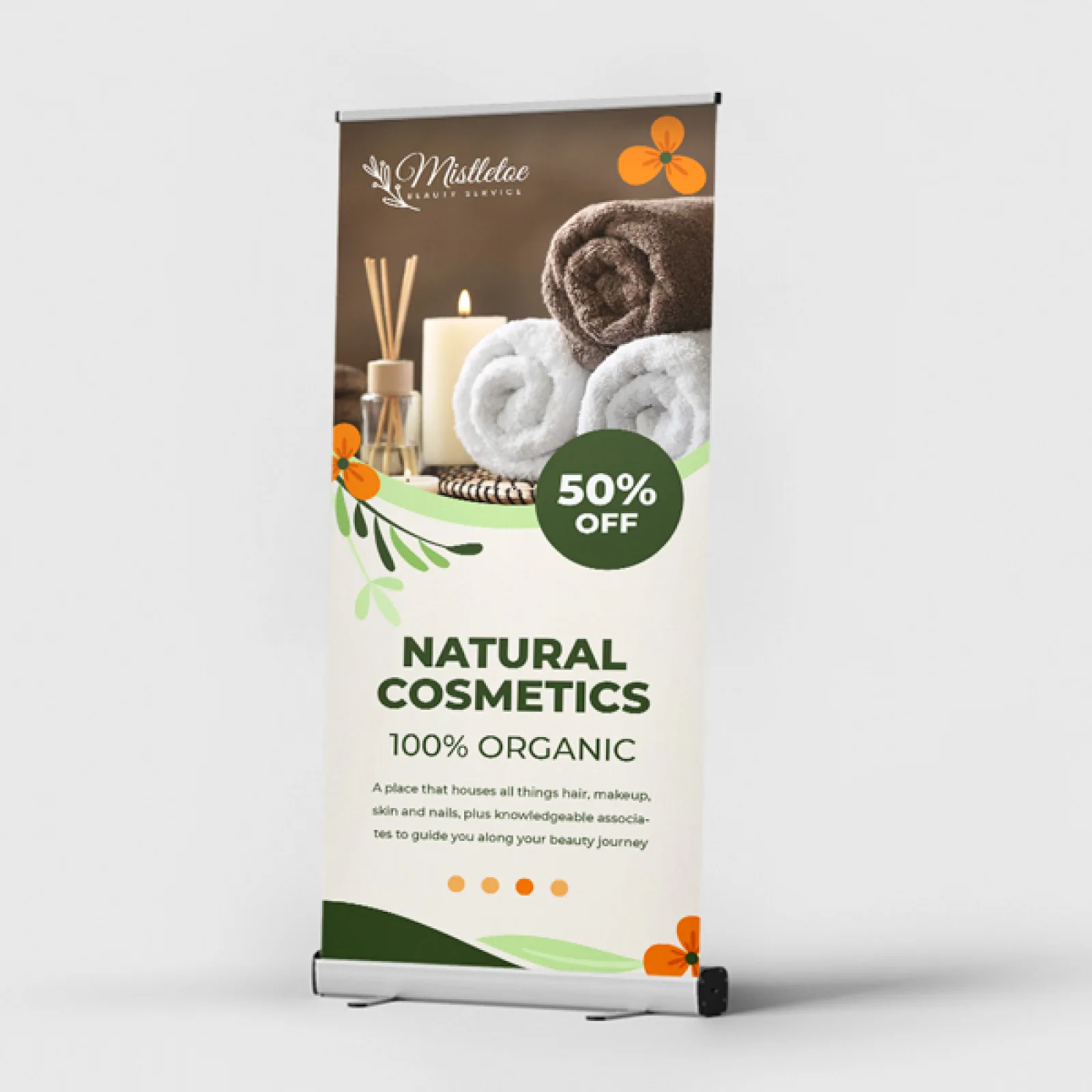
Retractable Banner Stands for Vertical Presence
Posters solve visibility at eye level. Banner stands solve it above the crowd, which matters far more than exhibitors expect on a busy floor. When aisles fill up, anything printed below shoulder height disappears behind people.
Standard retractable banner stands are the most practical solution for that problem because they combine height with portability. The graphic rolls into its own base, sets up in under a minute without tools, and travels as a single case. For exhibitors who work a circuit of shows through the year, that reusability is what makes the piece pay for itself.
Design them differently than a poster. A banner stand is read vertically and often at an angle, so put your logo and core message in the top third and leave the bottom third relatively quiet. Tables, chairs, and standing staff will block it anyway.
Two stands flanking your booth entrance frame the space and create a visual doorway. That framing effect is a small design decision that consistently changes how many people step in rather than walk past.
Feather Flags for Aisle and Outdoor Visibility
Feather flags do a job nothing else on this list can. Their height and shape break the flat visual plane of a convention hall, so attendees register them from much farther down an aisle than any wall-mounted graphic.
They are especially valuable in three situations: large halls where your booth sits far from the main entrance, outdoor or tented events where wind movement works in your favor, and shows where a competitor has bought a larger footprint next to you. Feather flags let a modest booth hold its own against a bigger neighbor.
One caution worth building into your planning. Height restrictions vary by show and by booth type, and inline booths often have stricter limits than corner or island spaces. Check the exhibitor manual before you order, not after. We have seen flags arrive perfectly printed and then sit in a box all weekend because nobody read the height rules.
Table Covers That Finish the Booth
A branded table cover is the least glamorous item in this checklist and one of the most noticeable in its absence. An uncovered folding table, or one draped in a plain cloth, undoes a lot of the work your other graphics are doing.
Printed table covers serve two purposes at once. They extend your branding to the surface where every conversation actually happens, and they hide the boxes, cases, and personal bags that inevitably end up underneath. Your extra brochure cartons need somewhere to live, and a full-drape cover turns that storage problem into clean presentation.
Order one per table, and for multi-day shows consider a spare. Coffee, marker ink, and adhesive residue accumulate quickly across three days on a floor.
Stickers That Travel Farther Than Your Booth
Stickers are the highest-reach, lowest-cost piece on this list. They leave your booth on laptops, water bottles, hard hats, and laptop cases, and they keep working long after the show closes.
They also solve a real floor problem: they give people a reason to approach who are not yet ready to talk. A bowl of well-designed die-cut stickers pulls foot traffic into your space, which gives your team an opening.
Keep the design simple, keep your URL short and readable, and skip the tagline. A sticker with too much copy on it does not get applied to anything.
Zone 2: Print That Starts the Conversation
Once someone stops walking, you have maybe 45 seconds. These pieces are built for that window.
Brochures: Your Booth's Core Handout
The brochure is still the piece most exhibitors build their booth around, and for good reason. A well-structured tri-fold or bi-fold gives you room to explain what you do, who you do it for, and why you are different, without demanding a five-minute read.
For trade shows specifically, we recommend building your brochure back-to-front. Panel one is the hook. The interior panels answer "how does this work?" The back panel carries your contact block, QR code, and a single next step. Attendees flip to the back first more often than designers expect.
Paper choice matters more here than anywhere else. A brochure printed on flimsy stock reads as disposable and gets treated that way. Something with weight to it stays in the tote.
Rack Cards for Quick, Low-Commitment Handoffs
Rack cards are the most underused piece in trade show printing. They are small enough to slip into a badge holder or a jacket pocket, cheap enough to hand out generously, and large enough to carry a real message.
Use them when you want to reach without cost. If your booth expects heavy traffic and your brochure budget is tight, rack cards carry the top-of-funnel load so your brochures can be reserved for people who actually qualify.
They also work well as a stand-alone piece for a single service line, one card per offering, so your team can hand out exactly what a given visitor asked about.
Flyers for Show Specials and Demo Schedules
Flyers exist for one reason at a trade show: time-sensitive information. Show-only pricing, a giveaway deadline, your demo schedule, a booth-number reminder for a partner's booth across the hall.
Because flyers are inexpensive and fast to produce, they are the piece you can afford to update between shows. We regularly turn around flyer reprints for exhibitors who realized on day one that their demo times shifted or their promo was not landing. That flexibility is the point. Do not put evergreen information on a flyer; put it on a brochure.
Zone 3: Print That Closes Qualified Leads
These pieces are not for everyone. They are for the buyer who asks a second and third question.
Sell Sheets for Product-Specific Detail
A sell sheet is one page, one product or service, one set of specs. It answers the technical questions that a brochure deliberately skips: dimensions, compatibility, pricing tiers, turnaround, compliance details.
Exhibitors with multiple product lines should print a short run of each sell sheet rather than one combined document. When a prospect asks about a specific SKU, handing them the exact sheet for it signals competence in a way a general catalog cannot.
Presentation Folders That Hold the Whole Story
Presentation folders are the difference between handing someone a stack of paper and handing someone a package. For high-value prospects, this is the piece that carries everything else: the brochure, two sell sheets, a business card in the die-cut slot, and a handwritten note if the conversation warranted one.
There is a practical benefit too. Folders protect the contents. Loose sheets get bent in a tote bag and dumped in a hotel trash can. A folder survives the trip home, which means your materials survive the trip home.
We suggest printing a modest quantity, enough for your realistic count of A-tier conversations, and building the contents on-site as needed. That way your best material goes to the people most likely to buy.
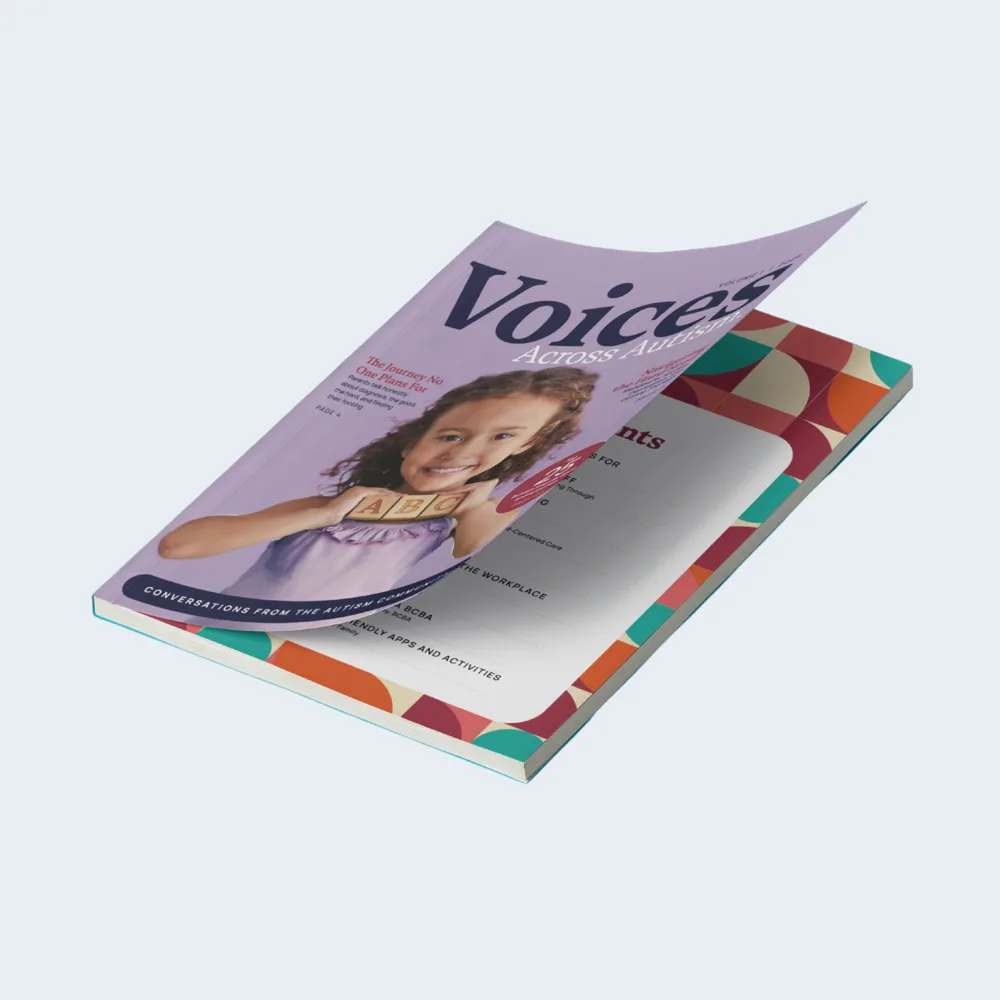
Catalogs and Booklets for Buyers Who Want Depth
If you sell a wide product range, a catalog earns its cost. Distributors, procurement teams, and specifiers genuinely want the full line in one place, and they will carry a catalog through an airport to get it.
Booklets serve a slightly different purpose. Where a catalog lists, a booklet explains. Use booklets for case study collections, implementation guides, buyer's guides, or annual research summaries. They position you as the expert rather than the vendor, and they tend to stay on desks far longer than any other piece on this list.
Print these conservatively. They are the most expensive item per unit, and they should only be handed to people who ask for them.
Zone 4: Print That Works After the Show
The show does not end at teardown. Most deals from a trade show close weeks later, and print gives you a way to reach people whose inbox is buried.
Postcards for Follow-Up That Doesn't Get Deleted
Post-show email follow-up competes with every other exhibitor's post-show email follow-up. A postcard does not.
Mail postcards to scanned leads within a week of the show, while the event is still recent memory. Reference the show by name on the card, restate one specific benefit, and give one clear next step. Exhibitors we work with often print these before the show and address them from the badge-scan export afterward, which cuts the turnaround dramatically.
Door Hangers for Hotel and Local Outreach
Door hangers are a niche play, but a strong one in two situations. First, some shows and host hotels permit sponsored room drops, which puts your message in front of attendees in a quiet moment rather than a crowded aisle. Confirm the rules with show management before you print, since unauthorized drops can cost you your booth.
Second, if the show is in a market you serve locally, door hangers extend your spend past the convention center. Same trip, same print run, additional territory.
How Many of Each Piece Should You Print?
Quantity is where most exhibitors overspend. Working backward from expected badge scans rather than expected attendance keeps the numbers honest.
A rough framework we give clients planning a first-time booth:
Piece | Suggested quantity basis |
Posters | 2 to 4 total, plus one spare of the primary |
Stickers | Highest volume item; plan for broad giveaway |
Rack cards | Roughly your expected total booth visitors |
Brochures | Roughly half your expected booth visitors |
Flyers | Enough for the promotion's duration, not the whole show |
Sell sheets | Split across product lines by expected interest |
Presentation folders | Your realistic count of qualified conversations |
Catalogs and booklets | Smallest run; by request only |
Two things we tell every exhibitor. First, running out of your cheapest piece on day one is a good problem; running out of your most expensive piece is not, because it means you gave it to the wrong people. Second, add roughly ten percent for damage, misplacement, and the pieces your own team takes home.
Your Trade Show Print Timeline: Working Backward From Load-In
Deadlines cause more booth print failures than budgets do. Build your timeline backward from load-in day, not forward from today.
Six to Four Weeks Out
Lock your messaging and finalize designs for the pieces with the longest lead time: catalogs, booklets, and presentation folders. Anything with folding, binding, or specialty finishing needs the most runway. Order proofs now, not later.
Three to Two Weeks Out
Place your brochure, sell sheet, rack card, and poster orders. This is also the point to confirm shipping: decide whether materials ship to your office first, to the show's advance warehouse, or directly to the venue. Advance warehouse deadlines are usually earlier than exhibitors expect, and missing one is expensive.
One Week Out
Order flyers with any final show-specific details, print your postcards for post-show follow-up, and do a physical inventory. Lay every piece out on a table, count it, box it, and label the boxes by zone. The team unpacking at 7 a.m. on load-in day will thank you.
Five Booth Printing Mistakes We See Every Season
One brochure doing five jobs. A single general brochure cannot attract from the aisle, explain a product spec, and close a buyer. Split the workload.
Booth number missing from everything. Attendees who want to come back later need to know where "later" is. Put it on flyers and posters.
Ordering by attendance, not by qualified traffic. Show attendance figures include people who will never walk your aisle.
No spare of the critical pieces. Damage happens in transit. Always.
Skipping the physical proof. Colors shift between screen and paper, and folds land differently than a flat PDF suggests. Approve a proof before a full run whenever the timeline allows.
Your Quick Trade Show Booth Checklist
Print this and check it off:
- Headline poster (plus one spare)
- Two supporting posters
- Stickers for giveaway
- Brochures for engaged visitors
- Rack cards for high-volume handoffs
- Flyers for show specials and demo times
- Sell sheets for each product line
- Presentation folders for qualified prospects
- Catalogs or booklets for deep-interest buyers
- Postcards prepped for post-show follow-up
- Door hangers, if approved for room drops or local outreach
- Booth number printed on every applicable piece
- Shipping deadline confirmed with show management
- Ten percent overage added to every order
Conclusion
A trade show booth is not a display. It is a distribution system, and printed pieces are what get distributed. The exhibitors who consistently generate qualified leads are not the ones with the biggest booths. They are the ones who decided in advance what each piece was for and who it was for.
Work through the four zones. Attract from the aisle with posters and stickers. Start conversations with brochures, rack cards, and flyers. Close serious prospects with sell sheets, folders, catalogs, and booklets. Then keep the momentum with postcards and, where permitted, door hangers. Set your quantities against realistic qualified traffic, build your timeline backward from load-in, and give yourself room for the reprint you did not plan on.
Do that, and you walk into the hall with a booth that has a job description for every piece of paper in the box.
Ready to Print Your Booth Materials? Let's Get Started
Brochure King prints high-quality brochures, posters, flyers, presentation folders, sell sheets, rack cards, booklets, catalogs, postcards, door hangers, and stickers for exhibitors across the United States, with fast turnaround built around show deadlines.
We work with exhibitors heading to the country's busiest trade show markets, including Las Vegas, Orlando, and Chicago, and we ship nationwide to offices, advance warehouses, and show venues.
Get a quote or contact us today to request a proof or talk through your booth print list with our team. Tell us your load-in date, and we will build the production schedule backward from it.
Frequently Asked Questions
What printed materials do I need for a trade show booth?
At minimum, a trade show booth needs posters for aisle visibility, brochures or rack cards as your primary handout, and sell sheets for product-specific questions. Most exhibitors also print presentation folders for qualified prospects, flyers for show-only promotions, stickers as giveaways, and postcards for post-show follow-up. Catalogs and booklets are worth printing if you sell a wide product range or need to demonstrate expertise in depth.
How many brochures should I bring to a trade show?
Base the number on expected qualified booth visitors rather than total show attendance, since most attendees will never enter your aisle. A practical approach is to print brochures for roughly half your expected booth visitors, use lower-cost rack cards for the rest, and add about ten percent for damage and misplacement. Running out of an inexpensive piece is manageable; running out of your most expensive piece usually means it went to the wrong people.
How far in advance should I order trade show printing?
Start four to six weeks before load-in for pieces with longer production times, such as catalogs, booklets, and presentation folders. Order brochures, posters, sell sheets, and rack cards two to three weeks out, and leave flyers and postcards until the final week so they can carry last-minute details. Always confirm the show's advance warehouse deadline first, since it is typically earlier than exhibitors expect.
