



Print Marketing for Freelancers and Consultants: How to Look Enterprise-Grade

Introduction
Most solo consultants lose at least one contract they should have won. Not to a better practitioner, and usually not on price. They lose to a firm that showed up with a folder, left something behind, and looked like an organization rather than a person with a laptop.
That gap is frustrating because it has almost nothing to do with the quality of your work. It has to do with perceived risk. A buyer signing with a 40-person agency feels covered. A buyer signing with you feels exposed, and spends the whole evaluation looking for reasons to feel less exposed.
Print is one of the few places where a one-person practice can close that gap completely. Printing is bought by the unit, not by headcount. A 16pt business card with soft-touch lamination is the same card whether it was ordered by a solo strategist or by a national consultancy. Nobody can tell from the card how many people work at your firm, and in our experience printing stationery and sales collateral for independent professionals, that is exactly the point.
Here is what to order, in what order, and how to spec it so it reads as established rather than as a first attempt.
What Buyers Are Actually Reading
When a prospect is deciding whether to hire an independent professional, they are running two checks at once. The first is whether you can do the work. The second, quieter one is whether hiring you will embarrass them internally.
That second check is where print does its work, because your materials usually get read in rooms you are not in.
Your Materials Go Where You Cannot
Almost no professional services decision is made by one person. The partner you pitched passes your information to a finance lead, an operations director, or a board member who never met you and never will. Whatever you left behind becomes your entire representation in that conversation.
A PDF attached to a forwarded email competes with every other attachment in that inbox. A printed folder sitting on a desk does not compete with anything. It sits there, in the room, carrying your name, until someone deals with it.
Consistency Reads as Infrastructure
The single strongest signal of an established firm is not any one piece. It is that the pieces match.
When the card, the folder, the one-pager, and the envelope all use the same logo placement, the same color values, and the same type, it implies a brand system, and a brand system implies that someone built one on purpose. A mismatched set implies pieces were ordered one at a time as each need came up, which is usually true for solo practitioners and is exactly the impression worth avoiding.
This is also the cheapest thing on the list to get right. Matching four pieces costs nothing extra at the press. It costs one afternoon of deciding on your specifications and then never deviating from them.
The Three Pieces That Carry the Most Weight
If the budget only covers three things, these are the three. Everything else on this page is an expansion of this set, not a substitute for it.
A Card That Survives the Handshake
The business card is the only piece most prospects will ever hold, and the quality difference is felt before it is seen. A thin card bends in a pocket. A 16pt card does not.
Stock weight does most of the work here, but finish is what people actually remember. Soft touch suede business cards have a velvety surface that is noticeably different from anything a prospect received that week, which is the entire mechanism: the card gets handled a second time because it feels unusual, and a card handled twice gets kept. For a sharper, more corporate read, premium business cards with lamination and spot UV put a gloss treatment on the logo against a matte field.
One practical note we flag often. Leave the back of the card doing real work. A service list, a specialty line, or a short positioning statement on the reverse costs nothing extra on a double-sided print and turns a contact card into a reminder of what you do.
A Folder That Turns a Stack Into a Deliverable
This is the piece most independent professionals skip, and it is the one that changes the read fastest.
Loose pages handed across a table are documents. The same pages inside a branded presentation folder are a package. Nothing about the content changed. The buyer's sense of whether you do this routinely changed completely.
A 9x12 folder holds a proposal, a one-page overview, a case study, and a business card in the card slot. Standard folders cover most needs. If your work is premium-priced, a suede folder carries the same soft-touch surface as the cards and keeps the set consistent.
Folders are also the lowest-risk item to order in quantity, because they carry no dated information. A generic branded folder with no phone number printed on it stays usable through a rebrand of everything inside it.
A One-Page Sell Sheet
The sell sheet is the piece that gets forwarded, photographed, and pinned to a corkboard.
One page, printed on both sides: what you do, who you do it for, how engagements are structured, and proof. Keep it to a single sheet deliberately. A one-pager is a document someone reads standing up. A six-page capabilities deck is a document someone promises to read later.
Common sell sheets handle the everyday version. Silk sell sheets add a smooth laminated finish that resists fingerprints, which matters for a sheet that gets passed around a conference table.
Print these in smaller runs than anything else in your set. Positioning changes, rates change, and this is the piece most likely to need updating within a year.
When to Add Brochures, Booklets and Stationery
Once the core three are in place, the next additions depend on how you actually win work.
Brochures for Referral Partners
If other professionals refer work to you—an accountant sending clients to a fractional CFO, a general contractor sending clients to a designer—then a tri-fold brochure is worth printing.
The reason is specific. A referral partner needs something to hand over that explains you when you are not there to explain yourself. A brochure does that in a format that fits a standard envelope and a reception desk display. A stack of them in a partner's office is a passive referral engine that keeps working between your check-ins.
Booklets for High-Value Engagements
For consultants whose engagements run into five or six figures, a perfect bound or saddle-stitched booklet stops being overkill and starts being proportionate.
A buyer committing a significant budget is building an internal case. A printed capability booklet with methodology, case studies, and outcomes gives them the artifact to build that case with. In practice, it functions as a leave-behind for the champion inside the organization who has to sell you to everyone else.
This is the one place where page count signals seriousness. Keep it under 16 pages anyway.
Stationery for the Paperwork Nobody Thinks About
Contracts, invoices, engagement letters, and thank-you notes all leave your office on paper or as a PDF built from one.
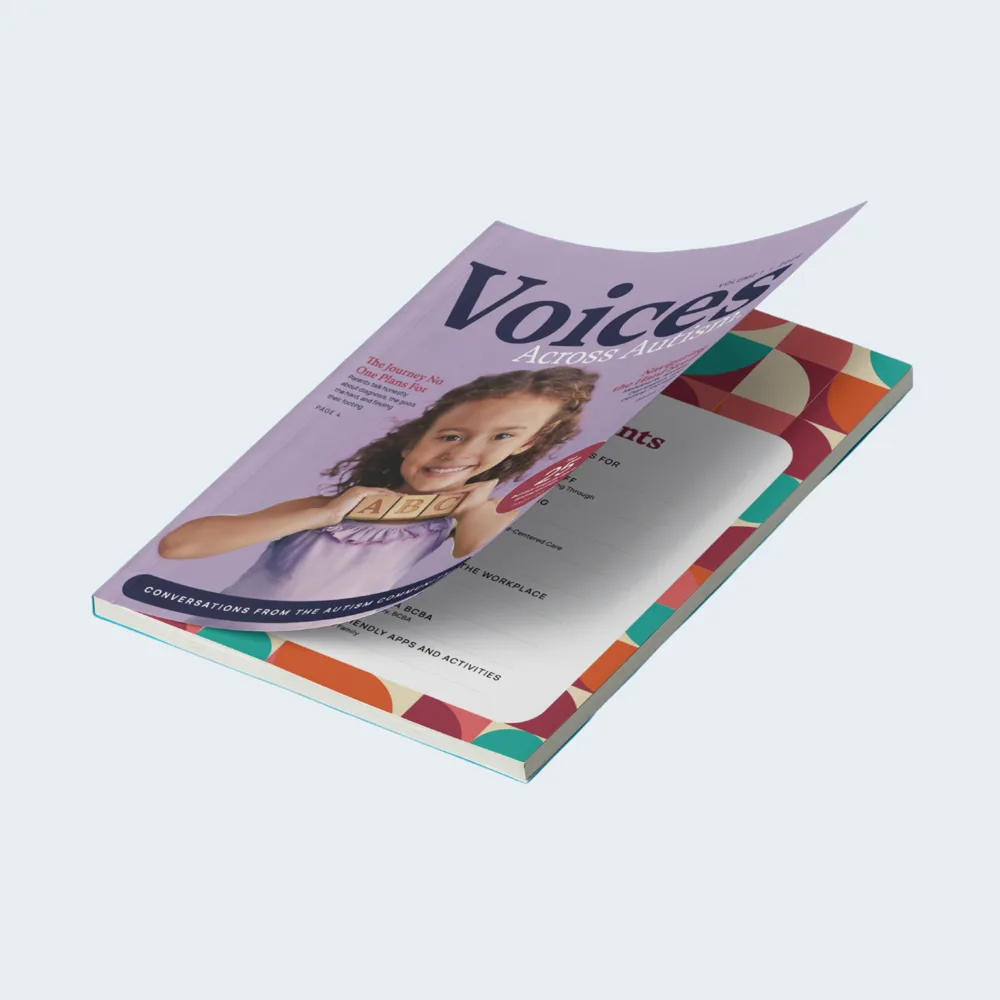
Letterheads are the most overlooked credibility item on this list, because the documents they carry are the documents that get filed, forwarded, and read closely. A contract on branded letterhead reads as a firm's contract. The same contract on a blank page reads as a template someone downloaded.
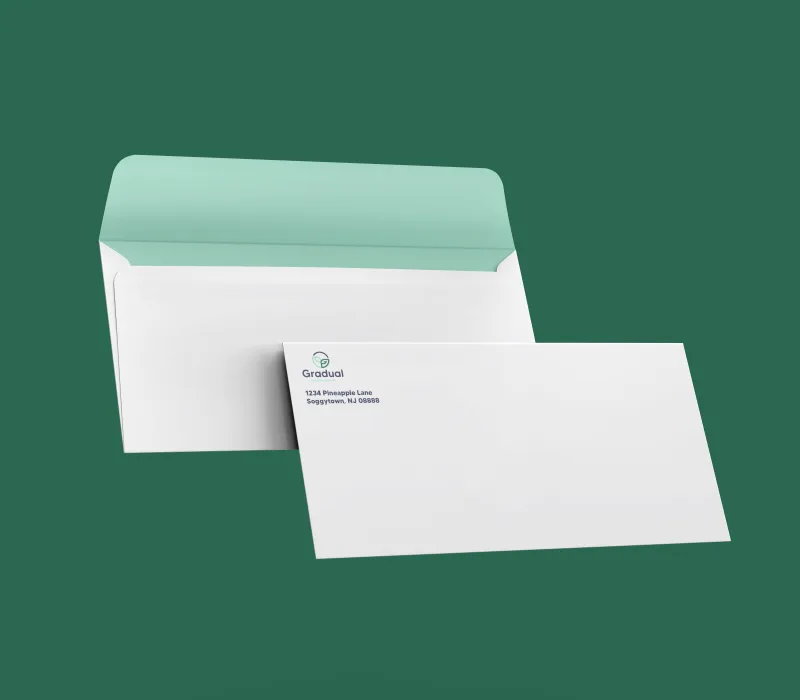
Premium linen uncoated letterheads use a textured stock that suits legal, financial and advisory work. Linen is a woven finish pressed into the sheet, and as Neenah describes its CLASSIC Linen line, the same finish is available across several basis weights, so texture and thickness are separate decisions. Pair letterheads with branded business envelopes so the outside of the piece matches the inside.
Staying in Front of Past Clients
For most independent professionals, the next contract comes from someone who already hired them. The problem is timing. Your former client thinks of you three months after they needed you, if at all.
A printed postcard solves a narrow version of this problem well. It arrives without a subject line to compete with, and it sits on a desk rather than scrolling out of view.
The useful cadence is quarterly, not monthly, and the useful content is not a sales pitch. A short note on something you are seeing in their sector, a new service line, or a case study headline with a link is enough. The goal is to be the name that surfaces when a need appears.
Getting the Size Right
Size determines postage, so this is worth specifying correctly before you print a few hundred of them.
To qualify for USPS card pricing, a mailpiece has to fall within a defined range. Per the USPS Business Mail 101 guidance on cards, the piece must be rectangular, at least 3.5 by 5 inches and no larger than 4.25 by 6 inches, with a thickness between 0.007 and 0.016 inches. Go over on any dimension, and the piece is priced as a letter instead.
Standard 16pt postcards sit at the top of that thickness range, which is the sweet spot: substantial enough that it does not feel like a coupon, still inside card specifications. If the mailing is a smaller, higher-value list, painted-edge postcards add a colored edge that makes the piece genuinely hard to throw away.
Check current rates and confirm your specific piece with USPS before a large run. Dimensions and prices both change.
Showing Up at Events Without a Booth Budget
Conferences, local business groups, and speaking slots are where solo practitioners are most visibly outgunned. A firm arrives with a backdrop and three staff. You arrive with a laptop bag.
You do not need to match their setup. You need to not look improvised.
A Retractable Banner Does Most of the Work
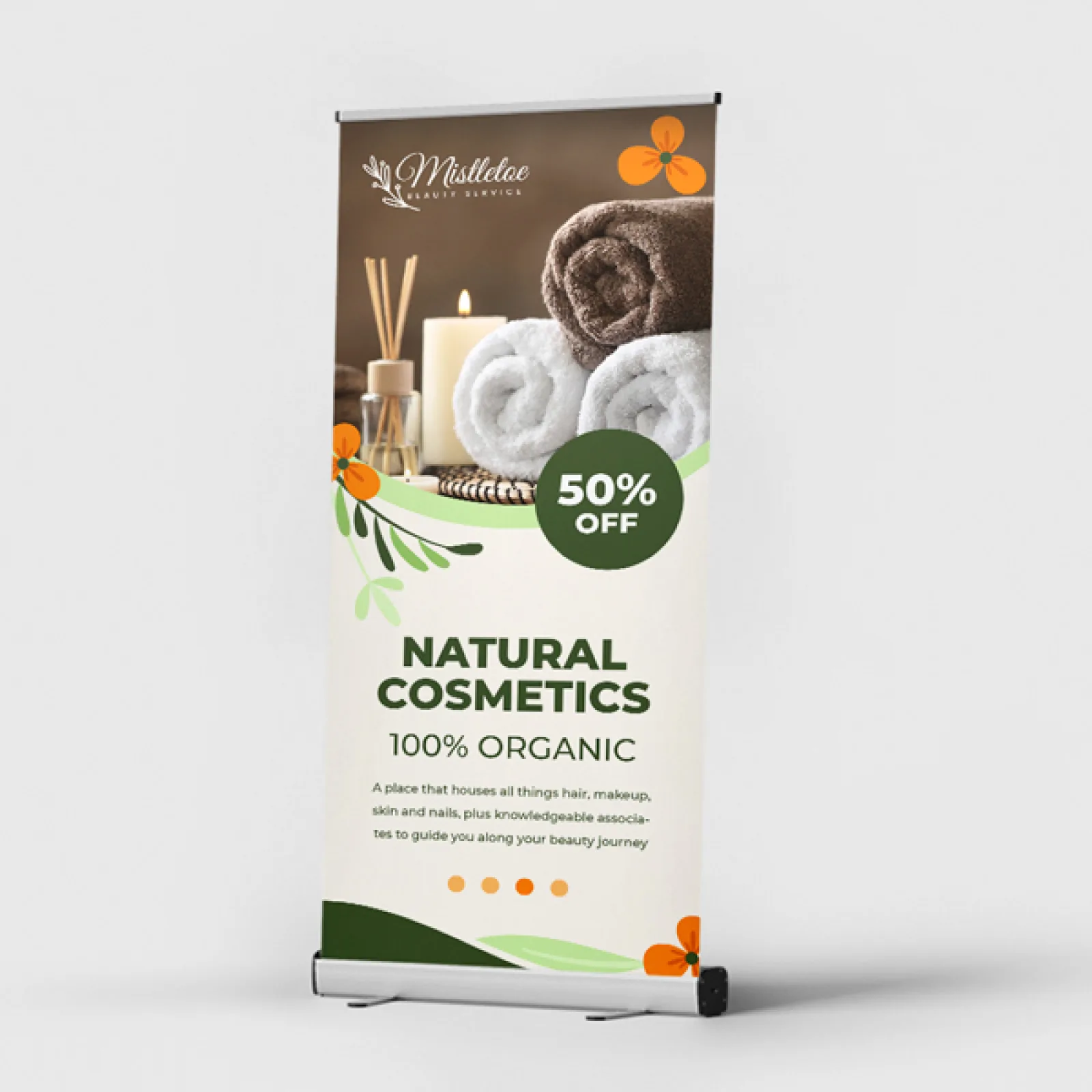
One retractable banner stand behind you at a table or beside a podium changes how a space reads. It sets up in under a minute, packs into a carrying case that fits in a car, and reuses indefinitely as long as you keep dated information off it.
Design rule: your name and what you do, readable from across a room. Nothing else. A banner crowded with bullet points is unreadable at the only distance it will ever be read from.
A Table Runner Finishes the Setup
If you get a table, a branded table runner is the difference between a table you were assigned and a space that belongs to you. It costs less than a full tablecloth, packs smaller, and works on any standard table.
Rack Cards for Walk-Up Traffic
A brochure is more than most event visitors will take. A 4 x 9 rack card fits in a jacket pocket and a conference tote without folding, which means it survives the trip home.
These are also the right piece to leave in display stands at partner offices, coworking spaces and local chambers.
Building the Set Without Overbuying
The most common mistake independent professionals make with print is not spending too little. It is spending the whole budget at once, on quantities they will never use, before the positioning has settled.
Order in This Sequence
Business cards and a presentation folder. These are the pieces you will use in every meeting regardless of how the practice evolves.
A one-page sell sheet. Short run. Expect to revise it.
Letterheads and envelopes. Once contracts and invoices start going out regularly.
Brochures, rack cards or a banner. Only when you have a specific channel that needs them, such as a referral partner's office or a booked speaking slot.
Resist printing a brochure before you know who hands it out. Boxes of unused brochures are the most common print regret we hear about.
Quantity Discipline
Printing gets cheaper per unit as runs get larger, which is exactly what tempts people into ordering five years of inventory.
The rule that holds up: print large quantities of anything that carries no dated or contact information, and small quantities of anything that does. Folders, banners, and table runners can run long. Sell sheets, anything with a phone number, and anything stating your rates should run short.
File Prep That Prevents Reprints
A few specifications prevent most of the problems we catch at file review:
Bleed of 0.125 inches on all sides for any artwork that runs to the edge.
CMYK color, not RGB. Screen colors do not all exist in print, and a logo built in RGB can shift noticeably.
300 DPI minimum on every placed image. A logo pulled off a website is almost always too low-resolution.
Fonts outlined or embedded, with a print-ready PDF as the preferred format.
Keep critical text clear of trim edges. Allow a safe margin so nothing important sits near a cut line.
If you do not have a designer, send what you have. Our team reviews every file for print errors before it goes to press, and catching a problem at that stage costs nothing compared to catching it after delivery.
Conclusion
Looking enterprise-grade as a solo professional is not about pretending to be larger than you are. It is about removing the signals that make a buyer hesitate.
Those signals are mostly physical. A card that bends. Loose pages handed across a table. A contract on a blank sheet. Materials that do not match each other because each was ordered separately. None of these say anything true about the quality of your work, and all of them get read as evidence anyway.
The fix is a small, consistent set: a substantial business card, a folder that turns documents into a package, and a one-page sheet that travels without you. Add brochures, booklets, stationery, postcards, and a banner as specific channels call for them. Keep the specifications identical across everything, print long on what does not expire and short on what does, and the set will hold up for years.
A one-person practice and a national firm order from the same presses. The difference is only whether you decided to.
Brochure King prints business cards, folders, and marketing materials for independent professionals and firms across New Jersey, New York, and Pennsylvania, and ships nationwide.
Email orders@brochureking.com, call 732-660-KING (5464), or request a quote today, and a rep will help you build a set that fits your practice and your budget.
Frequently Asked Questions
What print materials does a freelance consultant actually need?
Three pieces cover almost every situation: a thick business card, a presentation folder, and a one-page sell sheet. The card gets handled and kept, the folder turns loose proposal pages into a package, and the sell sheet travels to people who never met you. Brochures, letterheads, postcards and banners are worth adding once a specific channel calls for them, such as a referral partner's office or a booked speaking slot.
How much should a solo consultant spend on print marketing?
Less than most expect, if the order is right. Start with cards and folders, since both stay useful regardless of how the practice changes, and print those in larger quantities for a lower unit cost. Keep runs small for anything carrying a phone number, a rate or current positioning, because those are the pieces most likely to need reprinting within a year.
Do printed materials still matter when everything is sent digitally?
They matter most in the part of the sale you cannot attend. Professional services decisions usually involve people who never met you, and a PDF attachment competes with every other attachment in their inbox. A printed folder or one-pager sits on a desk instead, which is why leave-behinds still influence committee- and referral-driven decisions.
